Zooming Out
“Few animals inspire as much fear in rural India as the sloth bear.”
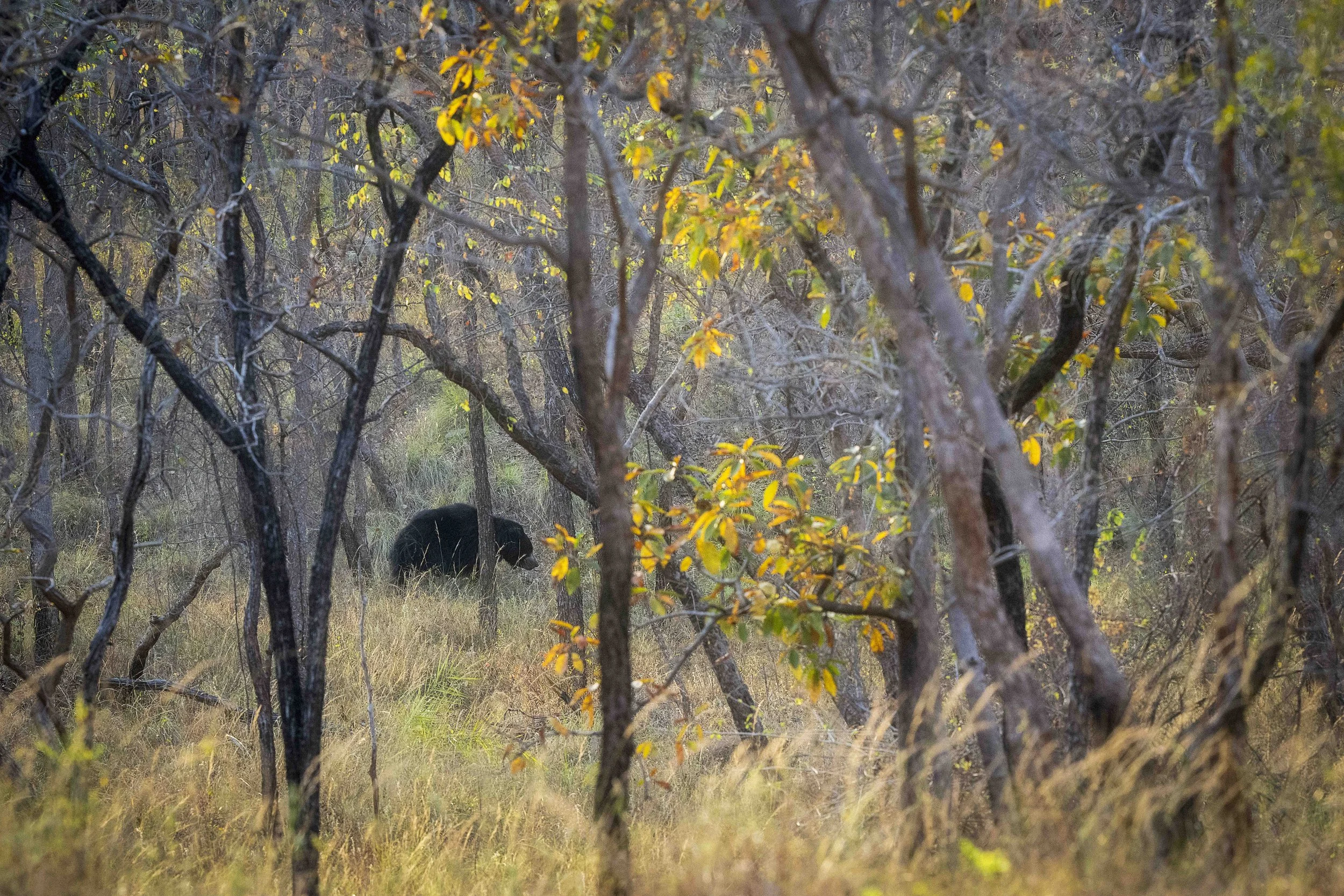
I’ve just returned from an India trip guiding in Bandhavgarh and Satpura Tiger Reserves. Both are brimming with wildlife, but Satpura is particularly good for sloth bears. In wildlife photography it’s easy to obsess over getting as close as possible to the animal, yet often the wider environmental shot is more artistic — perhaps not ideal for Instagram, but that platform is only one place to share images.
This shot came after spending time with a sloth bear near the road, capturing close-ups that show the detail of its fur as it searched for termites. We then moved further down the road to turn around, and I noticed a lovely opening through the trees that would look amazing if the bear walked through it. After the bear crossed and we were left with only rear shots, I moved the jeep back and waited. Sure enough, after a few minutes it passed through the trees and we were able to show the bear in its environment.
Compositionally I placed the bear on the left-hand third, leaving space for it to move into. The bear is the darkest element in the frame, so it stands out and draws the eye immediately; the surrounding trunks and branches naturally frame it.
If you compare this close-up to the wider shot taken just before the bear crossed, the wider image is far more compelling. This portrait offers nice detail of the sloth bear, but it lacks the context and drama that make a wall-worthy print. The wider view tells a stronger story and will have greater impact as a framed image.
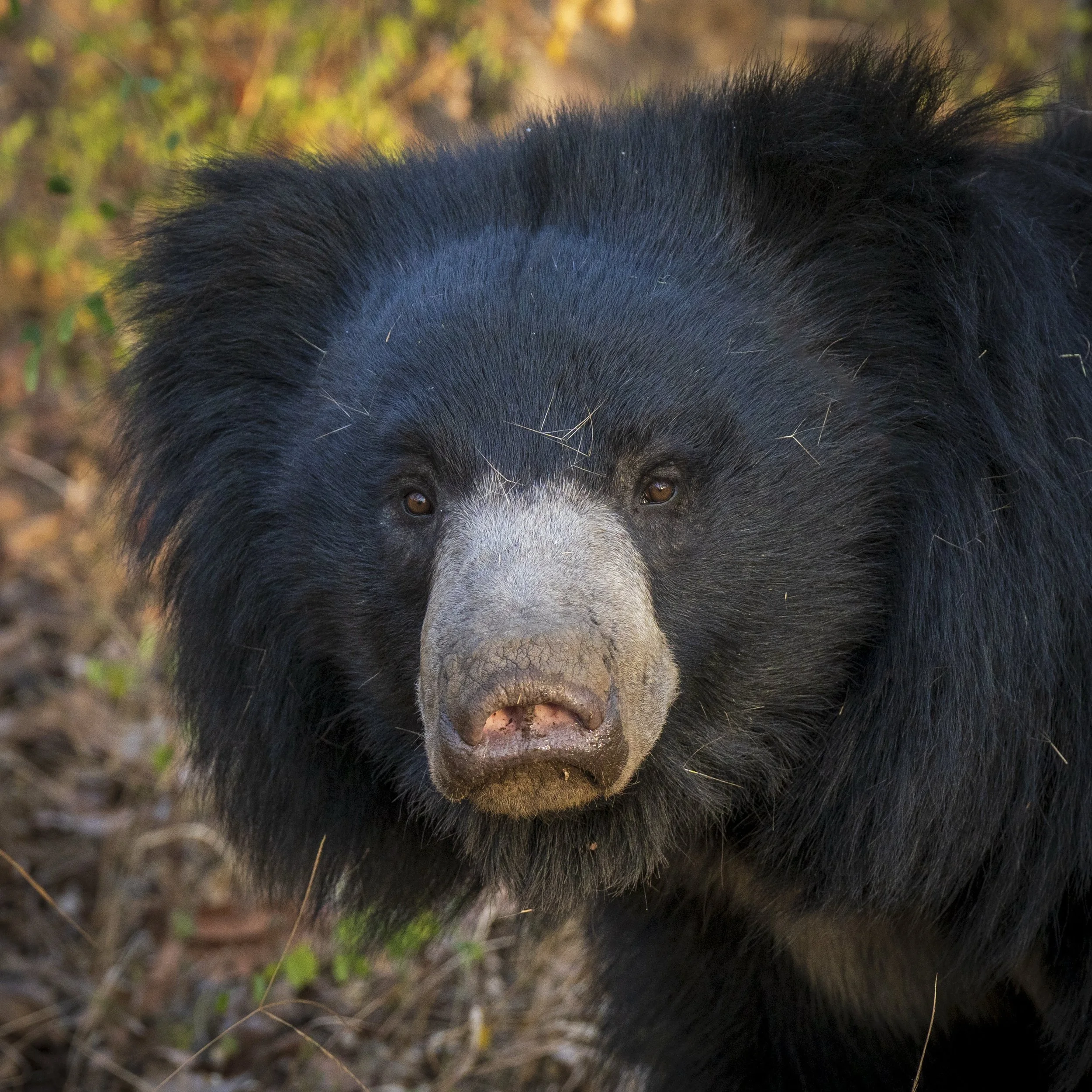
Takeaway: don’t shoot for just one platform. Work the subject and capture a variety of compositions — from close-up detail to wider environmental portraits — so your images can tell different stories in different contexts.